
Every UK business with a marketing budget eventually faces the same question. You have a limited amount of time and money, two channels competing for both of them, and no shortage of people telling you that one of them is dead and the other is the future. Email marketing, they say, is old-fashioned. Social media, they say, is where the customers are. Or the other way round, depending on who is selling what.
The honest answer is less dramatic than either claim, and more useful. Email marketing and social media do different jobs. Email is the channel that turns interest into revenue. Social media is the channel that creates the interest in the first place. Most UK businesses that grow steadily use both — but they do not spend on them equally, and they do not expect the same thing from each. This guide compares email marketing vs social media across the measures that actually decide where your budget should go: reach, return on investment, conversions, ownership, cost and effort. It also covers when to prioritise one over the other, how to combine them, and the mistakes we see businesses make most often.
The short answer: use both, but spend differently
If you only remember one line from this guide, make it this one: social media finds your customers, email marketing keeps them and sells to them. That single distinction explains almost every difference between the two channels, and it is the reason the smartest answer is rarely either-or.
Social media is a discovery channel. People scroll through Instagram, LinkedIn, Facebook and TikTok without looking for your business. Your content interrupts them, earns a few seconds of attention, and — if it is good — makes them aware you exist. That is enormously valuable, especially for a new business nobody has heard of yet. But awareness is not a sale, and a follower is not a customer.
Email is a conversion channel. When someone gives you their email address, they have done something a follower never does: they have invited you into their inbox and given you a direct line to them. There is no feed to compete with and no algorithm deciding whether your message appears. You write, you send, and it arrives. That directness is why email consistently outperforms social media on sales, repeat purchases and measurable return — and why businesses that neglect it end up renting their audience from platforms they do not control.
What this guide covers
We compare the two channels head to head on reach, return on investment, conversion rates, ownership, cost and effort. Then we look at the practical side: which channel suits which type of UK business, how to combine them into one system, the myths that waste the most money, and a simple framework for deciding where your next pound of effort should go. Where figures are quoted, they come from published industry benchmarks; where they vary by industry, we say so, because averages hide as much as they reveal.
Who this comparison is for
This guide is written for UK business owners and marketing managers who have to make a real decision with a real budget — a small ecommerce shop deciding between a newsletter and an Instagram push, a B2B firm weighing LinkedIn against an email nurture sequence, a local trades business wondering whether Facebook or email will fill the diary faster. If you already run both channels, the comparison will help you rebalance them. If you run neither, it will help you start with the right one.
Email marketing vs social media at a glance
Before the detail, here is the whole comparison on one screen. Every row is covered in depth further down, with the reasoning behind it.
| Email marketing | Social media marketing | |
|---|---|---|
| Best for | Sales, repeat purchases, nurturing leads, retention | Discovery, brand awareness, community, new audiences |
| Reach | Goes to most of your list, every time you send | A small fraction of followers see each post organically |
| Return on investment | The highest of any digital channel, by a wide margin | Lower and harder to measure; paid social can still pay |
| Conversions | Substantially higher — subscribers are already interested | Lower per interaction; volume makes up some of the gap |
| Ownership | You own the list and can take it anywhere | The platform owns the audience and sets the rules |
| Content lifespan | Sits in the inbox until it is read or deleted | Minutes to hours in a fast-moving feed |
| Targeting | Deep: behaviour, purchase history, preferences | Interest and demographic based; limited without ads |
| Measurement | Precise: opens, clicks, sales per send | Patchy: engagement is visible, revenue often is not |
| Biggest risk | List decay and poor deliverability if neglected | Algorithm changes, account issues, platform shifts |
How to read the numbers honestly
Comparison tables are useful, but they can mislead if you take every figure at face value. Email benchmarks come mostly from permission-based lists of people who asked to hear from a business; social benchmarks come from feeds full of people who did not. A like is not a click, and a click is not a purchase. When you read any statistic in this guide — or in anyone else’s — ask three questions: who was measured, what counted as a result, and whether the number describes your kind of business at all. A B2B consultancy and a fashion ecommerce shop will get very different results from the same two channels, and both can be right about which one works better for them.
Why averages hide the real story
An average open rate or engagement rate blends together excellent campaigns and terrible ones, big brands and one-person businesses, and industries with completely different buying behaviour. The gap between a well-run email programme and a neglected one is enormous — bigger, in our experience, than the gap between email and social themselves. The same is true of social: a business that posts thoughtful short video three times a week will see a different world from one that posts a flyer once a month. Treat the figures in this guide as direction, not destiny. The channel matters, but how you run it matters more.
What is email marketing?
Email marketing is direct communication with people who have given you permission to contact them. A subscriber hands over their email address — usually in exchange for something useful, like a guide, a discount or early access — and in return you send them messages they have agreed to receive. That permission is the whole foundation of the channel. It is what separates email from cold outreach, and it is why the audience is so much warmer than a social following.
In practice, email marketing covers two kinds of message. The first is the campaign: a newsletter, an offer, a product launch or an announcement, sent to a chosen segment at a chosen time. The second is the automated sequence: messages triggered by what a subscriber does, such as signing up, abandoning a basket, or going quiet for a few months. The second kind does the quiet heavy lifting. Once set up, a welcome series or an abandoned-basket flow keeps working while you get on with running the business, which is a large part of why the return on email is so strong.
How email marketing works
The mechanics are straightforward. You collect addresses through your website, your checkout, or your social profiles, with clear consent — in the UK that consent matters legally as well as practically, under GDPR and the Privacy and Electronic Communications Regulations. You store those addresses in an email platform such as Mailchimp, Klaviyo, HubSpot or ActiveCampaign, where you can group subscribers by what they bought, what they clicked, or where they are in their journey with you. Then you send. Each send produces clean, attributable data: how many people opened, how many clicked, how many bought, and how many unsubscribed. That feedback loop is what lets email improve month after month, because you can see exactly what worked and do more of it.
The emails UK businesses actually send
Strip away the jargon and most business email falls into a handful of familiar types. Newsletters keep customers in touch with what is new. Promotional emails carry offers and launches. Transactional emails confirm orders and bookings. And automated flows — welcome emails, basket reminders, post-purchase check-ins, win-back messages — handle the moments where timing matters more than creativity. A good email marketing service does not blast the same message to everyone; it sends the right message to the right group at the right moment, and it treats unsubscribes and complaints as data, not insults.
Newsletters and campaigns
The newsletter is the workhorse. Done well, it is a short, useful message that arrives on a predictable rhythm — weekly or fortnightly for most small businesses — and gives the reader a reason to open the next one. The best newsletters we see share a pattern: one clear idea, written for the reader rather than about the business, with a single thing to do next. The worst share a different pattern: a wall of announcements, five competing buttons, and no reason to care. Frequency matters less than consistency. A monthly newsletter that always arrives is worth more than a weekly one that appears in bursts and then vanishes for three months.
Automated sequences
Automation is where email quietly earns its reputation. A welcome sequence introduces a new subscriber to your business over a few days instead of dumping everything into one email. An abandoned-basket flow reminds a shopper — politely, once or twice — that they left something behind. A post-purchase sequence asks for a review at the right moment and suggests a sensible next purchase. None of this needs daily attention once it is built, which is why small teams get so much leverage from it. The effort goes in once, and the sequence keeps paying for months.
What is social media marketing?
Social media marketing is the work of building an audience and a reputation on platforms your customers already use — Facebook, Instagram, LinkedIn, TikTok, X and YouTube, among others. Where email starts with permission, social starts with attention. Nobody asked to see your post; it appears in their feed because the platform thinks they might like it, because they follow you, or because you paid to put it there. That difference shapes everything about the channel: the content has to earn its place in seconds, the audience is broader but colder, and the platform — not you — decides who sees what.
For UK businesses, social media does three jobs well. It introduces the business to people who have never heard of it. It shows the human side — the team, the work, the customers — in a way a website rarely can. And it creates a place where customers talk back, ask questions, and recommend you to others. Those are real, valuable outcomes. What social media does less well, on its own, is close sales and keep customers coming back, because the moment someone leaves the feed, the platform’s hold on their attention is gone.
How social media marketing works
You publish content — short video, images, stories, live sessions, polls, carousels — on the platforms where your customers spend time. The platform’s algorithm decides how widely each post travels, based on how people react to it in the first minutes and hours. Posts that earn saves, shares, comments and watch time travel further; posts that do not, stall. Over time, a consistent presence builds a following, and that following becomes an audience you can speak to — though never as reliably as an email list, because every post starts from zero reach and has to earn its distribution all over again.
Organic social vs paid social
There are two kinds of social media marketing, and confusing them is one of the most common budgeting mistakes we see. Organic social is the content you post without paying to promote it: it costs no ad spend, but it costs a great deal of time, and its reach is limited to a small share of your followers plus whoever the algorithm shows it to. Paid social is advertising on the same platforms — Meta Ads, LinkedIn Ads, TikTok Ads — where you pay to reach a defined audience, including people who have never heard of you. Paid social can be a powerful acquisition channel when it is targeted well and measured honestly. Organic social is a brand and community channel that pays off slowly. Both have a place, but they are not the same investment, and they should not be judged by the same numbers.
Where organic still works
Organic reach has fallen for years, and anyone promising otherwise is selling nostalgia. But it is not dead. Short video — Reels, TikTok, YouTube Shorts — still travels well beyond a follower base when it is genuinely useful or entertaining. LinkedIn posts from a person, rather than a company page, still reach a meaningful share of their network. And local businesses still get real mileage from community content: before-and-after work, team introductions, local events, customer stories. The common thread is that the content has to work as content first and marketing second. A post that reads like an advert will be treated like one — scrolled past.
When paid social earns its keep
Paid social earns its keep when it has a specific job and a measurable outcome: bringing new visitors to a landing page, promoting a lead magnet that grows your email list, retargeting people who visited your website but did not enquire, or putting a time-limited offer in front of a local audience. It struggles when it is used as a vague “brand awareness” spend with no follow-up — the clicks arrive, the budget goes, and nobody can say what it bought. The discipline is the same as with any advertising: define the audience, define the action, track the result, and stop what does not work.
Reach: who actually sees your content?
Reach is where the two channels diverge most sharply, and it is the comparison most businesses get wrong — because they compare follower counts with subscriber counts as if they were the same thing. They are not. A thousand email subscribers and a thousand social followers are different assets with very different value, and the difference comes down to one question: when you publish, who actually sees it?
Email reach: your list, your inbox
When you send an email, it goes to your list. There is no feed to fight through and no bidding for attention. Deliverability still matters — a message that lands in spam reaches nobody — but a healthy list on a reputable platform with good sending habits will see the large majority of messages land in the inbox. Of those, a meaningful share will be opened, and a smaller share will click. The funnel narrows at each step, but it starts wide, because the starting point is everyone you sent to.
That reliability compounds. Send four emails a month and each one reaches most of your list. Your audience hears from you regularly, in a place they check every day, without you having to re-earn their attention from scratch each time. This is the quiet advantage that makes email so effective for launches, reminders and time-sensitive offers: you can count on the message arriving, and you can plan around it.
Social reach: the algorithm decides
Social media works the other way round. When you post, the platform shows it to a small test audience first, watches how they react, and then decides whether to show it more widely. For most business pages, that means each organic post reaches only a small fraction of followers — often a low single-digit percentage for a standard feed post. A page with ten thousand followers may have only a few hundred people see a given post. The exceptions are short video formats, which can travel far beyond a follower base, but they do so unpredictably: one video takes off, the next five barely move.
This is not an accident or a flaw. It is the business model. Platforms earn their money by selling reach back to businesses through advertising, so organic reach is kept scarce. That does not make social media useless — far from it — but it does mean follower count is a vanity metric on its own. What matters is how many people actually see your content, how often, and what they do next. A small, engaged following that sees your posts is worth far more than a large one that never does.
Organic reach by platform
The pattern is similar everywhere, with differences of degree. Facebook page posts reach the smallest share of followers, which is why so many local businesses feel their page has gone quiet. Instagram feed posts do a little better, and Reels do better still, because the platform actively promotes short video to people who do not follow you yet. LinkedIn company pages reach a modest share of followers, while personal profiles tend to travel further. TikTok is the outlier: its recommendation engine can put a new account in front of thousands of strangers overnight, but the audience it finds is fickle, and converting viewers into customers takes deliberate work. None of this is fixed — platforms adjust their algorithms constantly, which is itself part of the point.
Why reach keeps falling
Organic reach has declined steadily for a decade, and there is no reason to expect it to recover. More businesses publish more content every year, competing for the same finite attention, while platforms have every incentive to keep the best distribution for paying advertisers. Add to that the shift toward video, which costs more to produce, and the rise of private sharing — people sending content to friends in messages rather than engaging publicly — and the picture is clear. Reach is not coming back. Businesses that build their marketing on borrowed reach will keep paying more for less, while businesses that own their audience will keep reaching it on their own terms.
Return on investment: where does your budget go further?
Return on investment is the question most business owners actually care about, and it is the one where email marketing’s advantage is widest. Industry studies have consistently found email to be the highest-return digital channel, often by a large multiple over paid social advertising. The exact multiple varies by industry, by how well each channel is run, and by what is counted as a return — but the direction of the finding has been stable for years, across study after study. Email returns more, because it reaches people who already know you, at a moment you choose, with a message you control.
Email marketing ROI
Three things drive email’s return. First, the audience is warm: subscribers opted in, which means they have already decided you are worth hearing from. Second, the targeting is precise: you can send different messages to buyers, browsers, lapsed customers and brand-new subscribers, instead of one message to everyone. Third, automation multiplies the effort: a welcome sequence or a basket-recovery flow generates orders without anyone having to press send. Add the fact that you do not pay extra to reach your own subscribers — unlike social, where reaching the same audience again often means paying again — and the economics become clear.
None of this happens by itself. Email’s return depends on a clean, engaged list, messages people actually want, and regular sending. A neglected list decays: addresses go stale, people lose interest, deliverability suffers, and the return falls with it. But the work that keeps email healthy — pruning inactive subscribers, testing subject lines, segmenting properly — is modest compared with the return it protects. For most UK businesses, email is the closest thing marketing has to a reliable earner.
Social media ROI — and why it is harder to measure
Social media’s return is real but harder to pin down, and that measurement problem causes a lot of wasted spend. Someone sees your post on Tuesday, thinks about it, searches for your business on Friday, and buys the following week. Which channel gets the credit? Your analytics will probably credit the search, or the direct visit, and social will look like it did nothing — even though it started the journey. This is the attribution problem, and it affects every business that uses social for discovery.
Paid social is easier to measure than organic, because you can track clicks, leads and purchases from a specific campaign. But even there, the return depends heavily on what happens after the click. A social ad that sends people to a slow page with a confusing offer will waste money no matter how good the targeting is. And organic social’s return is mostly indirect: awareness, trust, familiarity, and the kind of word of mouth that shows up as branded searches and direct visits months later. That value is genuine, but it does not appear neatly in a monthly report, which is why social so often gets either over-credited by enthusiasts or under-credited by sceptics.
Attribution: the hidden problem with social
The honest way to judge social media is to look at the whole picture, not a single channel’s report. Track branded search volume over time. Track direct traffic. Track how many new email subscribers arrive from social links. Track how often customers mention your social content when they enquire. None of these is a perfect measure on its own, but together they show whether social is doing its job — creating demand that other channels then convert. If you judge social only by last-click sales, you will underinvest in the channel that fills the top of your funnel, and then wonder why the bottom of it has gone quiet.
Conversions: which channel turns attention into sales?
Conversions are where the difference between a warm audience and a cold one shows up in hard numbers. Email subscribers convert at a multiple of social followers, and the reason is simple: they have already taken a step toward buying. Giving an email address is a small commitment, but it is a real one. Following an account costs nothing and means very little. A subscriber is further along the journey before you have written a word.
Email conversion rates
Email’s conversion strength comes from intent and timing. A welcome email arrives when interest is fresh. A basket reminder arrives when the purchase is half-made. A post-purchase email arrives when the customer is happiest with you. Each of these moments converts far better than a general broadcast, because the message matches what the reader is already thinking about. Automated flows are the strongest performers in most email programmes for exactly this reason — they are relevant by definition, since they are triggered by the subscriber’s own behaviour.
Newsletters and promotional campaigns convert at a lower rate than automated flows, but they still outperform social by a wide margin on a per-person basis, because every recipient chose to be there. The practical lesson is to build the automated flows first. They are the highest-converting emails you will ever send, they run without daily effort, and they keep working while you focus on everything else.
Social media conversion rates
Social media converts at a much lower rate per interaction, and that is not a criticism — it is the nature of the channel. People are scrolling for entertainment, news and connection, not to buy. A post has to interrupt that mindset, create interest, and then persuade someone to leave the platform and complete an action elsewhere. Most will not. Paid social converts better than organic, because it can target people by interest and behaviour and send them to a page built for one action, but it still starts from a colder audience than an email list.
Where social does convert well is in specific situations: a limited offer to a local audience, a product that photographs beautifully, a creator recommendation, or a retargeting campaign aimed at people who already visited your website. In those cases the platform’s targeting does real work. But as a general rule, social is the channel that creates the demand email later converts. Judging social by direct conversions alone misses its job — and judging email by reach alone misses its job too.
Why email subscribers convert better
The deeper reason is trust built over time. An email subscriber has heard from you before, perhaps many times. They know your name, your tone, and what you offer. When your message arrives with an offer, it lands in the context of that relationship. A social follower, by contrast, may have followed you months ago and barely noticed your posts since, because the algorithm stopped showing them. When your ad finally appears, you are effectively a stranger. That gap in familiarity is worth more than any targeting setting, and it is why the same offer converts so differently across the two channels.
Ownership: a rented audience vs an audience you own
If reach is the most visible difference between email and social, ownership is the most important — and the one businesses regret ignoring. Your email list is an asset you own. Your social following is an audience you rent, on terms set by someone else, that can change without warning.
Your email list is an asset you own
An email list belongs to you in a way no social following ever will. You can export it, move it to a different platform, and keep reaching the same people regardless of what any company decides. If your email platform raises its prices or shuts down, you take your list elsewhere and carry on. If your sending reputation takes a knock, you can repair it. The relationship is between you and your subscriber, and no intermediary can take it away. That permanence is why experienced marketers treat list growth as an investment rather than a task: every subscriber is a durable asset that keeps paying for years.
Your social following is rented land
A social following is different. Your followers belong to the platform. Facebook can reduce your organic reach overnight, as it has done repeatedly over the years. Instagram can change its algorithm and halve the visibility of the format you spent months mastering. An account can be restricted, suspended or shadow-banned, sometimes by mistake, with a slow and opaque appeals process. A platform can fall out of fashion, lose its audience to a rival, or face restrictions in a whole country. None of these are hypothetical: every one of them has happened to real businesses, some of which lost their main source of customers in a matter of days.
None of this means you should avoid social media. It means you should never build your business on it alone. The businesses that survive platform changes are the ones that used social to find people and email to keep them. Social is the top of the funnel; email is the foundation underneath it.
What happens when a platform changes the rules
Consider a business that spent three years building a large Facebook following, then watched its organic reach fall by more than half after a feed change. The followers were still there. The content was still good. But the business could no longer reach them without paying, and the price of reaching them kept rising. The same story has played out on Instagram with the shift to video, and on every platform that has ever prioritised its own revenue over its creators’ reach. The lesson is not that platforms are villains — they are businesses, doing what businesses do. The lesson is that a channel you do not control can change the terms at any time, and the only defence is an audience you own.
Cost and effort: what each channel really takes
Ask which channel is cheaper and you will get a confident answer from both sides — which should tell you the question is wrong. Social media looks free, because posting costs no ad spend. Email looks cheap, because sending to your own list costs little per message. Both impressions are misleading. The real cost of a channel is the total effort it takes to run it well, and on that measure the two are closer than they appear, though they spend their effort in different places.
The true cost of email marketing
Email’s costs are mostly visible and predictable: the platform subscription, which grows with the size of your list, plus the time spent writing, designing and analysing. The hidden cost is list building. Growing a list takes time and deliberate effort — lead magnets, signup forms, checkout prompts, and the patience to let it compound. But once the list exists, the marginal cost of each send is small, and you never pay extra to reach the same people again. That is the economic heart of email: the audience is an asset you build once and use repeatedly, instead of renting attention anew every month.
There is also a cost to doing email badly. A list bought from a broker, or built without proper consent, will damage deliverability and can breach UK data protection rules. Sending too often burns out subscribers; sending too rarely lets them forget you. But these are costs of execution, not of the channel, and they are avoidable with basic discipline.
The true cost of social media
Social media’s costs are mostly hidden. The platform is free, but the content is not. A single good short video can take hours to plan, shoot and edit. A consistent posting schedule across two or three platforms can absorb a day or more a week, before you count replying to comments, monitoring messages, and keeping up with new formats. Then there is the advertising: once organic reach stopped being enough, most serious social programmes became paid programmes, and the spend is ongoing — stop paying, and the reach stops with it.
Put together, a business that posts daily on several platforms and boosts its best content can easily spend more time and money on social than on email, while reaching fewer of the people who matter. That does not make social a bad investment — its job is different — but it does puncture the idea that social is the free option. It is free the way a free puppy is free: the acquisition costs nothing, and everything after it costs plenty.
Time: the cost nobody budgets for
For a small UK business, time is usually the scarcer resource, not money. And on time, the two channels differ in an important way. Email is batchable: you can write a month of newsletters in a focused session, build your automated flows once, and let them run. Social is continuous: the feed never sleeps, trends move weekly, and a week of silence is visible to everyone. Before committing to a daily social schedule, count the hours honestly — including the thinking, the filming, the editing and the replying — and ask whether the same hours spent on email would bring in more business. For many small teams, the answer is yes.
When to use email marketing
Email earns its place whenever the goal is to move someone closer to buying, or to keep a customer coming back. If you have a list — even a small one — email should be your first call for launches, offers, reminders, onboarding and win-back campaigns. It is also the right channel for anything that needs depth: a detailed explanation, a case study, a guide, or a message that deserves more than a few seconds of attention. Social is a poor place for nuance; the inbox is a good one.
Use email for sales, retention and nurturing
The clearest use cases are the ones tied directly to revenue. A welcome sequence that turns a new subscriber into a first-time buyer. An abandoned-basket flow that recovers sales that would otherwise be lost. A post-purchase sequence that asks for a review and suggests a sensible next step. A re-engagement campaign that wakes up subscribers who have gone quiet. A regular newsletter that keeps your business in mind so that when the reader finally needs what you sell, you are the name they remember. None of these needs a large list to work. A list of a few hundred engaged subscribers will outperform a social following ten times its size on every one of them.
Who should prioritise email first
Some businesses should build email before they build social, and they usually know who they are: their customers buy repeatedly, the purchase needs thought, or the relationship matters more than the first impression. If that sounds like your business, start with the list.
Ecommerce and online shops
For an online shop, email is the highest-return channel available, and the gap is not close. Shoppers who subscribe have already shown buying intent, and the automated flows — welcome offers, basket reminders, back-in-stock alerts, post-purchase follow-ups — recover revenue that would otherwise simply vanish. An ecommerce business with a good email programme and a modest social presence will usually outsell one with a large social following and no email at all. If you sell online, the email list is not a nice extra. It is the business.
B2B and professional services
For B2B firms, consultancies, agencies and professional services, email fits the way decisions actually get made: slowly, by several people, over weeks or months. A decision-maker who downloads your guide today may not be ready to talk for a quarter. Email keeps you in front of them through that period with useful content — a case study here, a practical guide there — so that when the need becomes urgent, you are already trusted. Social media, especially LinkedIn, is excellent for finding those people in the first place. But it is email that nurtures them into a conversation, and the firms that do both well win the work.
When to use social media
Social media earns its place whenever the goal is to be discovered, to build familiarity, or to give people a reason to talk about you. If nobody knows your business exists, email cannot help you — you have no list to send to. Social can. It puts you in front of strangers, shows them what you do and who you are, and gives them a low-effort way to follow along. That is a job only social can do at scale, and it is why even businesses that live on email still need a social presence.
Use social for discovery, awareness and community
The clearest use cases are the ones tied to attention rather than transactions. Launching a new product or service and wanting people to know it exists. Building a brand that people recognise and remember. Showing the work behind the business — the team, the process, the customers — in a way that builds trust before any sales conversation. Running a local campaign, an event, or a seasonal push. Gathering quick feedback through polls and comments. And, crucially, growing the email list itself: every social profile should be working to turn followers into subscribers, because a follower you convert is worth many times a follower you merely keep.
Who should prioritise social first
Some businesses should build social before they build email, and again they usually know who they are: they are new, visual, local, or built around a personality. If nobody has heard of you yet, discovery comes first — but the list should follow close behind, from day one.
New brands with no audience yet
A new business has no list, no reputation and no word of mouth. Social media is the fastest way to fix that, because it lets you reach strangers without waiting for search rankings or referrals. Short video is particularly powerful here: a useful, entertaining clip can reach thousands of people who have never heard of you, at no ad cost, in a way no other channel can match for a new brand. The discipline is to convert that attention while you have it — a lead magnet, a signup link in the bio, a reason to join the list — so that the audience you borrow from the platform becomes an audience you own.
Visual and local businesses
Businesses whose work photographs well — restaurants, salons, florists, builders, photographers, venues, fitness studios — get more from social than most, because their product is the content. A before-and-after photo, a behind-the-scenes clip, or a customer story does marketing work that words alone cannot. Local businesses benefit too: social platforms are where communities actually gather online, and a business that shows up there consistently becomes part of the neighbourhood’s conversation. For these businesses, social is often the first channel customers check — but it still should not be the only one.
How to combine email and social media: the flywheel
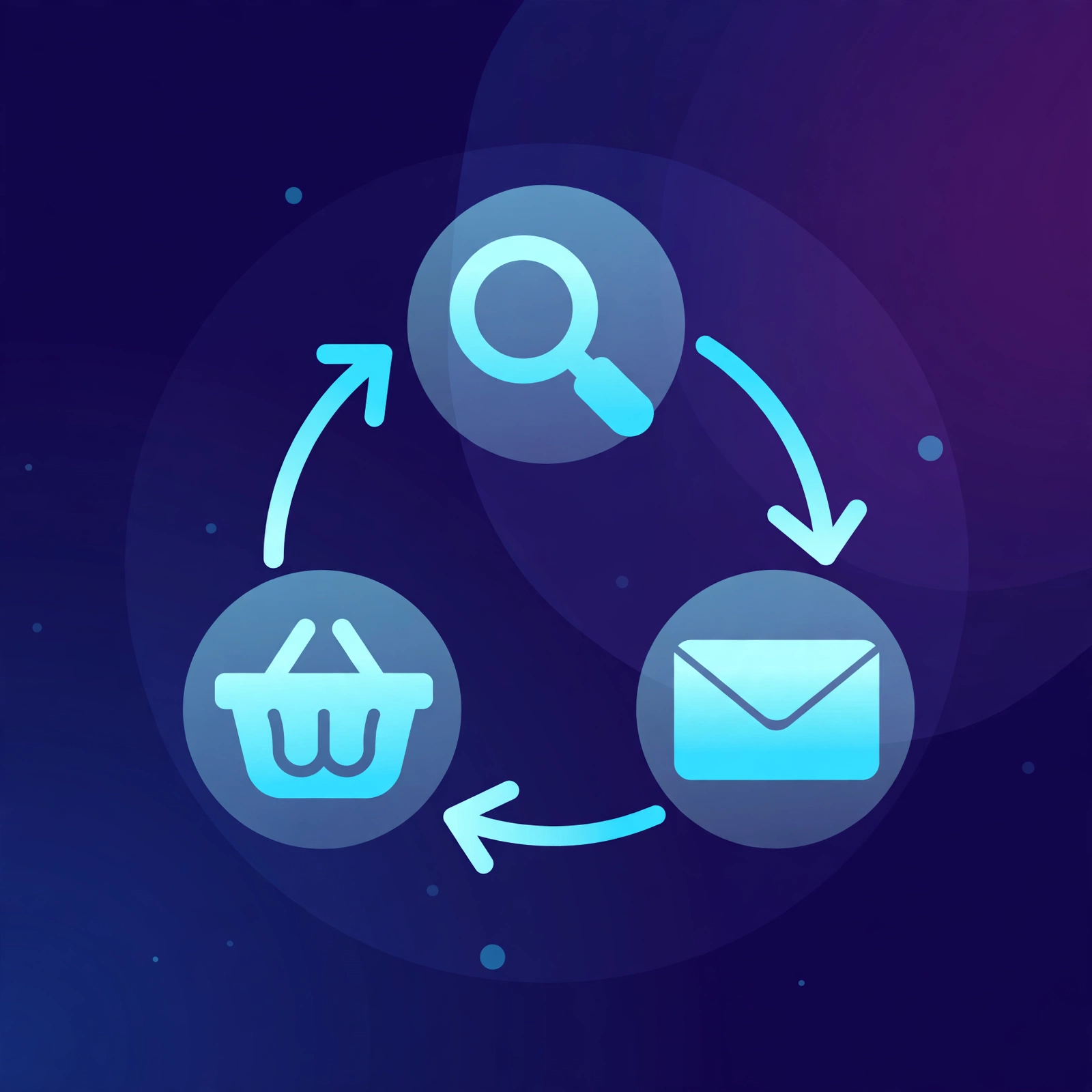
The best answer to email marketing vs social media is not a choice between them. It is a system that uses each channel for what it does best, so that each one makes the other stronger. Social finds people. Email converts them and keeps them. Email content feeds social. Social engagement feeds the list. Run properly, the two channels form a loop — a flywheel — that gets more valuable the longer it turns.
Step 1: Use social for discovery
Start where strangers are. Publish useful, entertaining content on the one or two platforms where your customers actually spend time — not every platform, just the ones that matter. For a B2B firm that usually means LinkedIn. For a local or visual business, Instagram and Facebook. For a business chasing a younger audience, TikTok. The goal at this stage is not sales. It is attention from the right people, earned by content that is genuinely worth their time.
Step 2: Turn followers into subscribers
Attention that never leaves the platform is borrowed, and it can be taken away. So every piece of social content should offer a path to your list. A lead magnet in the bio — a guide, a checklist, a template, a useful tool — that is worth an email address. A signup link in stories and posts. A competition that collects addresses instead of just likes. A pinned post that explains what subscribers get and why it is worth joining. The conversion rate from follower to subscriber will be small, and that is fine: the subscribers you gain are the most valuable followers you have, because they have chosen a direct relationship with you.
Lead magnets that actually work
The lead magnets that convert best share three qualities: they solve one specific problem, they are quick to consume, and they are genuinely useful without a sales call. A one-page checklist beats a forty-page ebook. A template beats a white paper. A short video that answers a question your customers actually ask beats a generic guide. And the offer should match the audience: a B2B lead magnet should help with a work problem, while an ecommerce one might offer early access or a first-order incentive. Test a few, keep the one that converts, and promote it everywhere your social audience can see it.
Step 3: Nurture and convert by email
Once someone joins your list, email does the work social cannot: it builds the relationship over time, in private, at a pace you control. A welcome sequence introduces the business and its best content. A regular newsletter keeps the connection warm. Targeted offers go to the people most likely to act on them, instead of being broadcast to everyone. And because you can see who opened, clicked and bought, each send makes the next one smarter. This is the stage where the investment in social pays off — not on the platform, but in the inbox.
Step 4: Repurpose email content for social
The loop closes when email content becomes social content. A newsletter insight becomes a short video or a carousel. A subscriber question becomes a LinkedIn post. A customer story from an email reply becomes a testimonial on Instagram. A popular email subject becomes a poll. This is efficient as well as effective: you are not creating twice the content, you are using the same thinking in two formats, for two audiences, in the two places each audience prefers. And the social posts that come from real subscriber questions and real email data tend to perform better, because they are grounded in what your audience actually cares about.
Common myths about email vs social media
Most of the bad decisions in this area come from myths that sound plausible and fall apart on inspection. Here are the three we hear most often from UK businesses, and what is actually true.
Myth 1: “Email is dead”
Email has been declared dead roughly once a year for two decades, and it has outlived every channel that was supposed to replace it. The reason is structural, not sentimental. Email is an open standard, not a platform: nobody owns it, nobody can change its algorithm, and every adult with an online account has an address. Younger people use email differently — less for chatting with friends, more for shopping, subscriptions and work — but they use it. The channel that is dying is not email. It is the generic, irrelevant bulk email that nobody asked for, and good riddance to it.
Myth 2: “Social media is free”
Social media costs nothing to join, and that is where the freeness ends. The content takes hours to make. The community takes hours to manage. And once organic reach is no longer enough, the advertising takes real money — every month, indefinitely, because the moment you stop paying, the reach stops. A business that budgets properly for social will usually find it costs as much as email, sometimes more, for a lower direct return. That does not make it a bad spend. It makes it a spend that should be judged honestly, with its real costs on the table.
Myth 3: “You have to pick one”
The framing of email vs social as a fight is the myth that does the most damage, because it pushes businesses to abandon the channel they need most. A business that only does email will grow slowly, because it has no way to meet new people. A business that only does social will convert poorly, because it has no way to follow up properly. The right question was never which channel wins. It is which job each channel should do, and how they hand work to each other. Social finds, email converts, and the businesses that understand that division beat the ones still arguing about it.
How to decide where to invest: a simple framework
By now the pattern should be clear, but a pattern is not a plan. Here is a practical way to decide where your next effort goes, based on where your business is today rather than on what worked for someone else.
Three questions to ask before you spend
First, do people already know you exist? If the answer is no — a new business, a new service, a new area — discovery is your bottleneck, and social media deserves the larger share of your effort until the audience exists. Second, do you have a way to follow up with the people who find you? If the answer is no, building the email list is the priority, because attention without follow-up is attention wasted. Third, where does your revenue actually come from today — new customers or repeat ones? If it is repeat business, email will almost always give you the better return. If it is new business, social deserves more weight. Answer those three honestly and the split largely decides itself.
A starter split for small UK businesses
For a small business starting from scratch, a sensible starting point is to spend the early effort on discovery — social content and a lead magnet — while building the email foundations at the same time: a signup form on the website, a welcome sequence, and one automated flow. As the list grows, shift the balance. Within a year, most healthy small businesses end up spending more time on email than on social, because the list is doing the selling and social is doing the finding. The exact split will vary, but the direction of travel is consistent: social opens the door, email does the business.
If your budget is tight
When money is tight, start with email. The platform costs are modest, the list is yours to keep, and a small list of engaged subscribers will generate more revenue than a large following that barely sees your posts. Use free and low-cost tools to begin, grow the list with one good lead magnet, and add social as a discovery channel once the email foundations are in place. Tight budgets punish rented attention most, because the rent never stops.
If you already have an audience
If you already have a following — a few thousand followers, a page with regular engagement, a community that knows you — your priority is conversion. Put your energy into turning that audience into subscribers, then into customers. Audit your social profiles for signup paths, promote the lead magnet consistently, and build the automated email flows that turn new subscribers into buyers. The audience you already have is the most valuable asset in your marketing. The question is whether you are using it, or just admiring it.
How WappexSol helps UK businesses get both channels working
Email marketing vs social media is not a debate to win. It is a system to build: social media finding the right people, email turning them into customers, and both channels feeding each other month after month. That is the work we do for UK businesses every day — from building email lists and automated sequences that sell while you sleep, to social media campaigns that put your business in front of the people most likely to buy from it.
If you would like help with your email marketing, your social media, or both working together as one system, talk to WappexSol, a UK digital marketing agency. Message us on WhatsApp, call us on +44 7435 738263, or email info@wappexsol.com for a no-obligation chat. We provide email marketing services and social media marketing services for UK businesses, as part of our wider digital marketing work — including PPC and Google Ads for businesses that want paid reach alongside organic growth, and SEO services for businesses that want to be found on Google as well. Tell us where your business is today, and we will tell you honestly which channel deserves your next step.
Email marketing vs social media — frequently asked questions
Should I invest in email marketing or social media first?
It depends on where your business is today. If nobody knows you exist yet, start with social media to build an audience — but set up email capture from day one so the audience you find becomes a list you own. If you already have customers or a following, start with email, because it will convert the attention you already have into revenue faster than any other channel.
Is email marketing better than social media marketing?
For sales, retention and measurable return, yes — email consistently outperforms social media, because it reaches people who opted in, with no algorithm in the way. For discovery, brand awareness and reaching new people, social media is better. Neither is better in every situation, which is why most growing UK businesses use both, with email doing the selling and social doing the finding.
Can social media replace email marketing?
No. Social media cannot replace email marketing because you do not own your social audience — the platform controls who sees your content, and algorithm changes, account issues or policy shifts can cut your reach overnight. Email is the only marketing channel you fully own. The two channels work best together, with social growing the list and email converting it.
How do I turn social media followers into email subscribers?
Offer something worth an email address — a useful guide, a checklist, a template or early access — and promote it consistently: a link in your bio, mentions in posts and stories, and a pinned post explaining what subscribers get. Keep the signup simple, asking only for the email address to start with. Even a small conversion rate builds a valuable list over time, because every subscriber is someone who chose a direct relationship with your business.
How much time should a small UK business spend on email vs social media?
There is no fixed split, but a practical starting point is to spend the early effort on social discovery while building your email foundations, then shift the balance toward email as your list grows. Many small businesses end up spending more time on email than on social within a year, because the list does the selling. Whatever the split, protect time for both: a week of silence on social is visible, and a neglected email list decays quietly.