
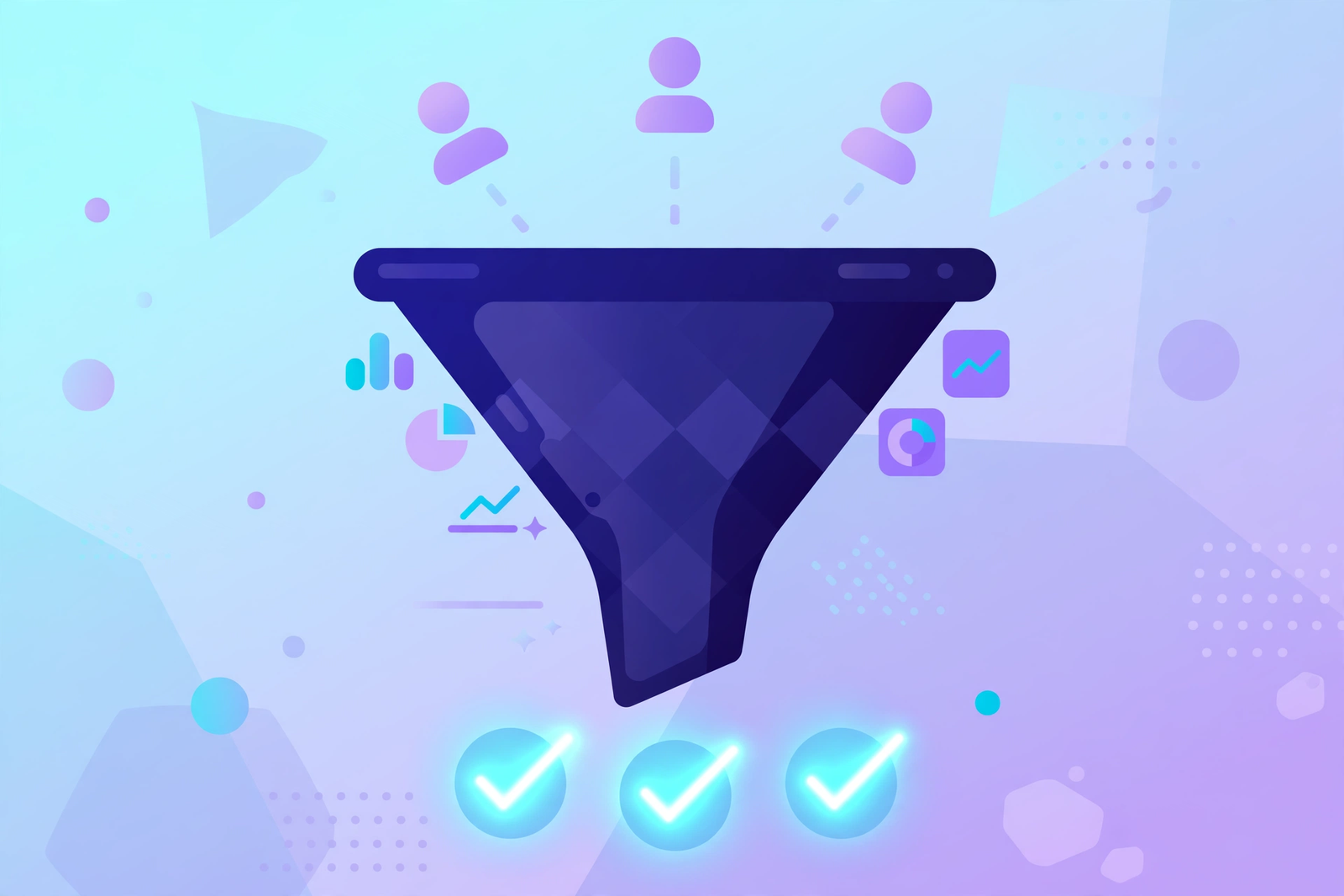
What is conversion rate optimisation? If you run a website that brings in visitors but not enough enquiries, this is the question that matters most. Conversion rate optimisation — CRO for short — is the systematic process of increasing the percentage of your website visitors who take a valuable action: making an enquiry, booking a consultation, buying a product, or signing up for a newsletter.
Here is the uncomfortable truth most UK businesses discover sooner or later: you can double your traffic through digital marketing and still double your costs, or you can improve your conversion rate by a few percentage points and get more business from the traffic you already have — without spending a penny more on ads. CRO is how you do the second.
This guide explains exactly what conversion rate optimisation is, how it works, and the practical quick wins any UK business can apply.
What is conversion rate optimisation? A clear definition
Conversion rate optimisation is the practice of improving a website or landing page so that a higher share of visitors complete a desired goal. Your conversion rate is calculated simply:
Conversion rate = (number of conversions ÷ number of visitors) × 100
So if 1,000 people visit your website in a month and 20 of them make an enquiry, your conversion rate is 2 per cent. If CRO lifts that to 4 per cent, you get 40 enquiries from the same 1,000 visitors — twice the business from the same traffic.
This is why CRO sits at the heart of profitable conversion rate optimisation strategies: it multiplies the value of everything else you do. Every improvement in SEO, PPC and social media becomes more profitable when the website those campaigns send people to is better at converting.
Crucially, CRO is not guesswork, and it is not just “redesigning the website.” It is a disciplined, evidence-driven process: research how visitors actually behave, form hypotheses about what is stopping them from converting, test changes, and measure the results. The businesses that win at CRO treat it as an ongoing programme, not a one-off project.
Why CRO matters more than most UK businesses realise
Consider two companies spending the same amount on Google Ads. Company A has a conversion rate of 1 per cent; Company B has 3 per cent. Company B gets three times the enquiries for identical ad spend. Its cost per enquiry is a third of Company A’s. That gap compounds every single month.
For most businesses, increasing traffic is expensive. More ads cost more money; more content takes more time. CRO works on the asset you already own — your website — and the leverage is enormous:
- More revenue without more traffic. Small percentage-point improvements in conversion rate often translate into large absolute gains in enquiries and sales.
- Better return on every marketing channel. SEO, PPC, email and social all become more profitable when the destination page converts better.
- Deeper customer insight. CRO research reveals exactly what your customers worry about, what objections they have, and what convinces them — intelligence that improves your whole business, not just your website.
- Reduced reliance on paid advertising. When organic visitors convert at a higher rate, each piece of content and every ranking delivers more business value.
- Competitive advantage. In competitive UK markets, the company with the better-converting website can afford to outbid rivals on paid channels and still win.
How conversion rate optimisation actually works: the process
Professional CRO follows a repeatable cycle. Understanding it helps you judge whether an agency is doing real optimisation or just shuffling buttons around.
1. Research: find out what is actually happening
CRO starts with evidence, not opinions. The research phase typically includes:
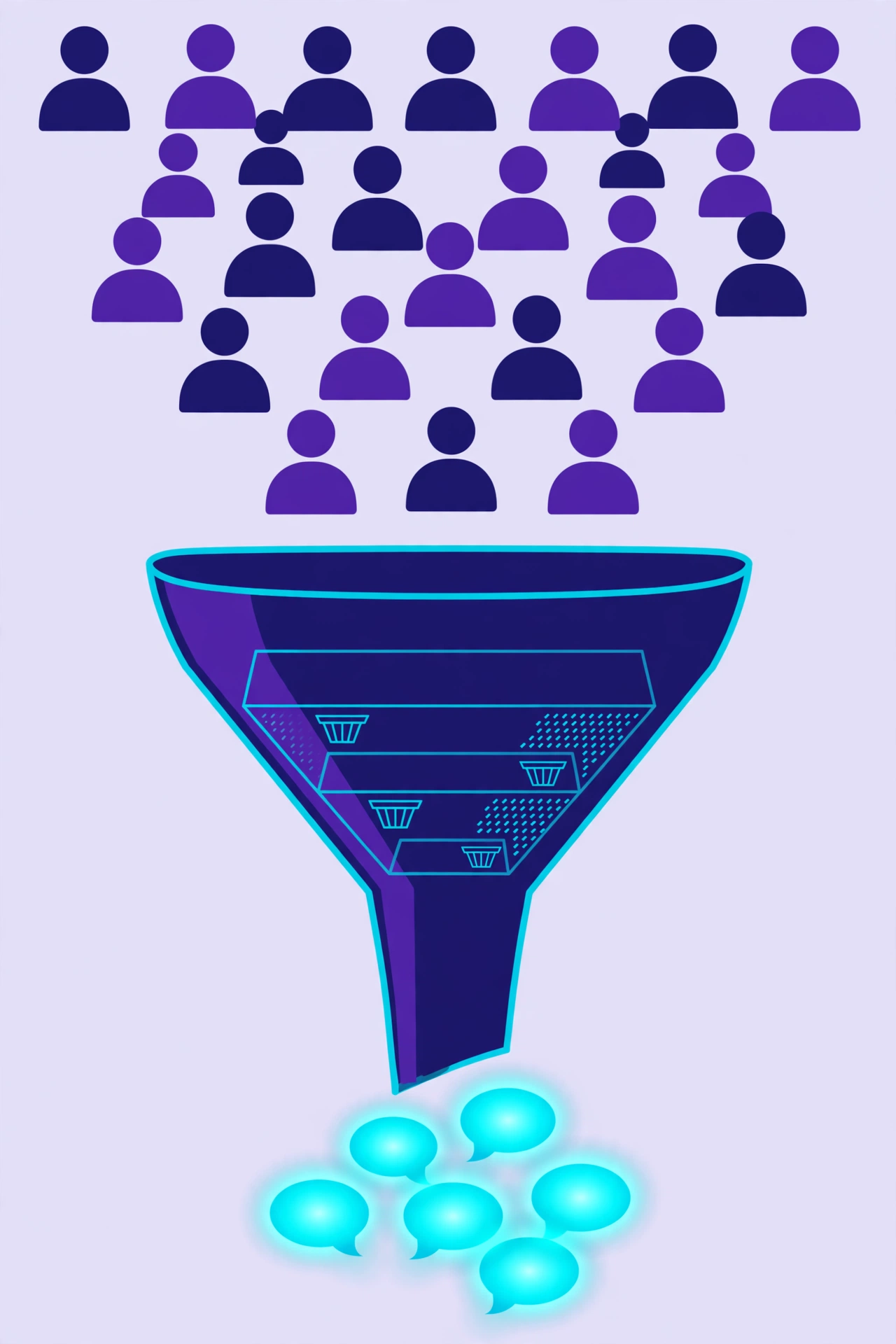
- Analytics analysis — where do visitors drop off? Which pages have high bounce rates? Google Analytics 4 shows where the funnel leaks.
- Heatmaps and session recordings — tools that show where visitors click, how far they scroll, and where they hesitate. Watching real sessions is often revelatory.
- On-site surveys — asking visitors a single question at the right moment (“What stopped you from getting in touch today?”) produces brutally honest answers.
- User testing — watching people from your target market try to complete a task on your site exposes friction you are blind to.
- Customer interviews — recent customers can tell you what nearly stopped them buying, and what finally convinced them.
2. Prioritise: focus where the money is
You cannot test everything. Effective prioritisation weighs three things: potential impact (how many people and how much revenue a change could affect), ease of implementation, and the strength of the evidence behind it. High-traffic, low-converting pages are usually the best starting point.
3. Hypothesise: turn findings into testable ideas
Every test starts as a statement: “Because we observed X, we believe changing Y will cause Z.” For example: “Because heatmaps show visitors never scroll to the contact form, we believe adding a quote-request button above the fold will increase enquiries.” If you cannot state the hypothesis, you are not doing CRO — you are redecorating.
4. Test: A/B testing done properly
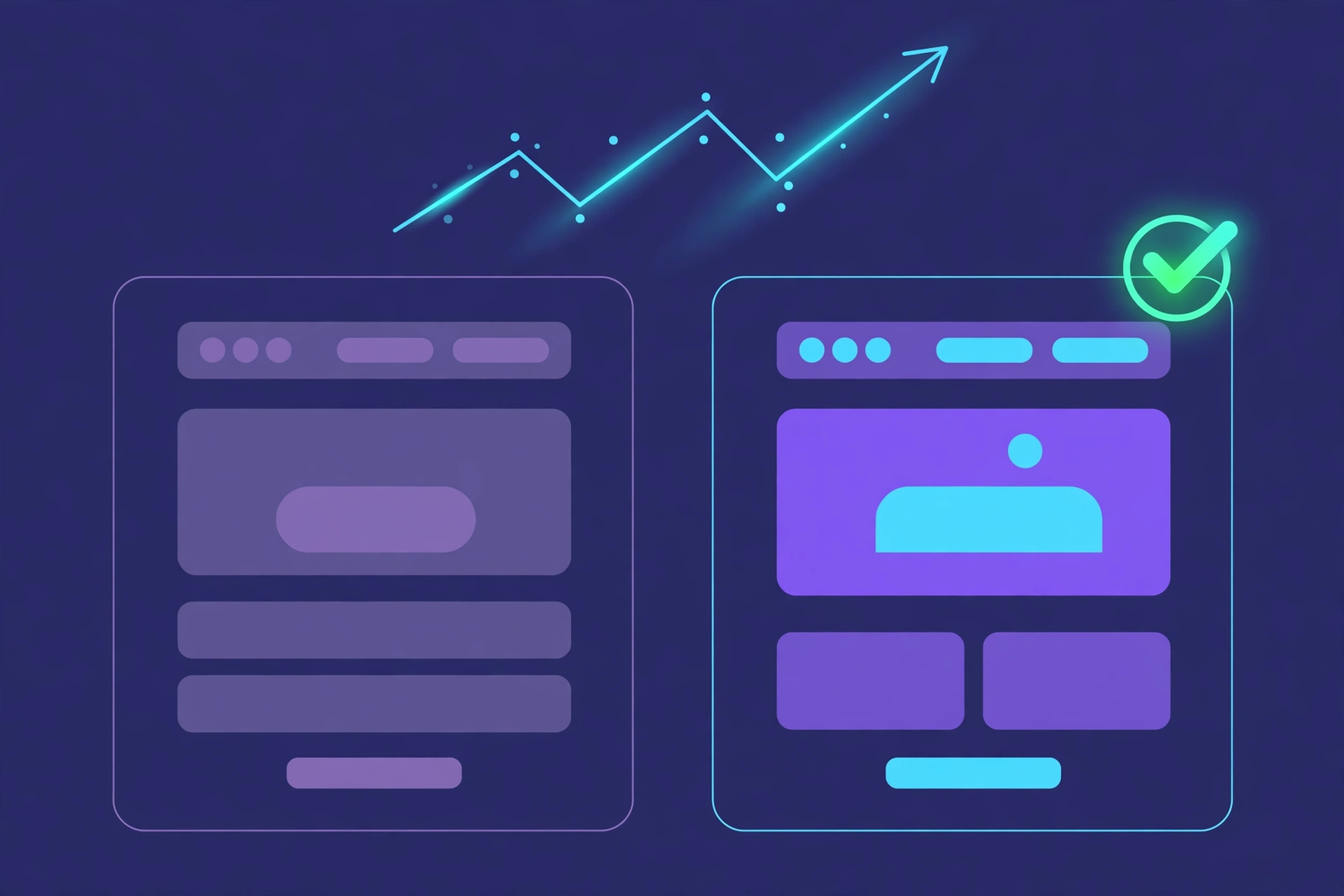
A/B testing (split testing) shows version A to half your visitors and version B to the other half, then measures which converts better. Good tests share three traits: they change one meaningful thing at a time, they run long enough to reach statistical significance, and they are not stopped early just because the first day’s numbers look good. For smaller UK businesses with modest traffic, tests simply take longer to conclude.
5. Analyse and repeat
Winning tests get rolled out; losing tests get their learnings recorded (a failed test that tells you something about your customers is still valuable). Then the cycle starts again. CRO programmes compound: each win stacks on the last, and the customer knowledge grows with every round.
Conversion rate optimisation quick wins for UK businesses
A full CRO programme takes time, but some fixes improve conversions almost immediately because they address universal visitor behaviours. Here are the highest-value quick wins:
| Quick win | Why it works |
|---|---|
| One clear call to action per page | Pages offering five different actions get five times the hesitation. One dominant CTA per page tells visitors exactly what to do next. |
| Put the CTA above the fold | A large share of visitors never scroll. If the only way to enquire is at the bottom, those visitors convert at zero per cent. |
| Shorter forms | Every extra field reduces completion rates. Ask only what you genuinely need to start a conversation — name, contact details, and the message. |
| Visible trust signals | Reviews, testimonials, client logos, guarantees and industry accreditations near the CTA reduce the perceived risk of getting in touch. |
| A real phone number | UK visitors still want the option to call. A visible, clickable number reassures even those who end up enquiring through the form. |
| Faster page loading | Slow pages lose visitors before they see your offer. Speed is a conversion lever as much as a technical one. |
| WhatsApp or live chat | Lowering the barrier from “fill in a form and wait” to “send a message now” catches visitors who would otherwise leave. |
None of these requires a redesign. Together, they often lift conversion rates materially — and they buy you time while longer-term testing runs.
Landing pages: where conversion rate optimisation pays off fastest
Your homepage has to do many jobs. A landing page has one: convert the visitor it was built for. That is why dedicated landing page design is the highest-leverage element of most CRO programmes — especially for paid traffic, where every click costs money.
A high-converting landing page follows a simple formula:
- A headline that matches the ad or search query. If your advert promises “emergency plumber in Leeds,” the landing page headline should say exactly that — not “welcome to our website.”
- One offer, one audience, one action. Remove navigation menus, sidebar links and anything else that leaks attention.
- Benefits before features. Visitors care about what changes for them — faster response, less downtime, more bookings — not your technology stack.
- Social proof close to the form. A short testimonial or review rating beside the enquiry form answers the silent question “can I trust these people?”
- Risk reversal. Free consultations, no-obligation quotes and clear cancellation terms make saying yes feel safe.
CRO vs SEO vs PPC: how they fit together
These three disciplines are often confused, or treated as rivals. In reality they are a sequence:
- SEO and PPC bring visitors. They solve the traffic problem — getting the right people to your website.
- CRO turns visitors into business. It solves the conversion problem — making the traffic you paid for actually pay off.
Running PPC without CRO is like pouring water into a leaky bucket: the website wastes the clicks the campaign paid for. Doing SEO without CRO means your rankings deliver a fraction of the enquiries they could. The smart order for most UK businesses: fix the obvious conversion blockers first, then scale traffic with confidence that the website can handle it.
Common conversion rate optimisation mistakes to avoid
- Testing without research. Randomly testing button colours because “we heard it works” wastes time. Real CRO tests ideas grounded in visitor evidence.
- Stopping tests too early. Calling a winner after a day or two produces false positives. Let the maths decide, not your impatience.
- Copying competitors. What converts for a competitor’s audience may not convert for yours. Use competitors as inspiration for hypotheses, never as conclusions.
- Only testing tiny things. Button colours and fonts rarely move the needle. Headlines, offers, page structure, trust signals and friction in forms are where the real gains live.
- Ignoring mobile. The majority of UK web traffic is mobile, and mobile conversion rates lag desktop badly on most sites. If your CRO programme is desktop-first, it is missing most of your visitors.
- Treating CRO as a one-off. Markets change, competitors improve, and visitor expectations rise. CRO is a programme, not a project.
How to get started with conversion rate optimisation
If you want to begin CRO on your own website this week, follow this sequence:
- Install proper analytics. Make sure Google Analytics 4 and Google Search Console are set up and conversion events (form submissions, calls, purchases) are tracked. You cannot optimise what you do not measure.
- Find your biggest leak. Look at which high-traffic pages convert worst, and where visitors drop out of your enquiry or checkout flow.
- Apply the quick wins. Work through the table above — one clear CTA, shorter forms, trust signals, a visible number.
- Build one dedicated landing page for your most important traffic source and measure its conversion rate as your baseline.
- Run your first real A/B test on the headline or main offer — and let it run to a statistically sound conclusion.
- When the quick wins are exhausted, bring in specialists. A structured CRO programme with proper research and testing compounds in a way ad-hoc changes cannot.
Get more from the traffic you already have
If your website attracts visitors but too few enquiries, the problem is rarely your marketing — it is your conversion rate. We run structured conversion rate optimisation programmes for UK businesses: research, A/B testing, landing page design and ongoing experimentation that turn more of your existing traffic into paying customers.
Message us on WhatsApp, call us on +44 7435 738263, or email info@wappexsol.com for a no-obligation chat — and if you would like to talk about budgets, message us on WhatsApp and we will give you a clear, honest quote for your specific situation.
Conversion rate optimisation — frequently asked questions
What is conversion rate optimisation in simple terms?
Conversion rate optimisation (CRO) is the process of improving your website so a higher percentage of visitors take a valuable action — like making an enquiry or buying. It works through research, testing changes, and measuring what actually increases conversions.
How long does conversion rate optimisation take to show results?
Quick wins — clearer calls to action, shorter forms, visible trust signals — can improve conversions within days. A structured programme of A/B testing typically needs several weeks per test to reach statistically reliable results, and meaningful cumulative gains usually appear over two to three months.
Is CRO only for ecommerce websites?
No. While online shops were early adopters, CRO is just as valuable for service businesses, B2B companies and lead-generation sites. If your website has a goal — enquiries, bookings, demo requests — it has a conversion rate worth optimising.
What is A/B testing and why does CRO need it?
A/B testing shows half your visitors the original page and half a changed version, then measures which converts better. Without it, you are guessing. Testing proves whether a change genuinely improves conversions or just felt like a good idea.
Should I do SEO or conversion rate optimisation first?
Fix the obvious conversion blockers first. Driving more traffic to a website that does not convert wastes the investment — every click that bounces is money spent for nothing. Optimise the key pages, then scale traffic with SEO and PPC in the confidence that visitors will convert.
