
Every UK business reaches a point where the software it relies on starts working against it rather than for it. Spreadsheets multiply, staff invent workarounds, and simple tasks take far longer than they should. When that happens, ask a serious question: what are the benefits of custom software for business, and could a system built for your company solve problems off-the-shelf tools never will?
Custom software — sometimes called bespoke software — is an application designed and built around one business: its processes, its customers, its data and its goals. It is the opposite of buying a ready-made package and bending your way of working to fit it. This guide explains the benefits of custom software for business in plain terms, the signs you have outgrown generic tools, when custom software is not the right call, and how a build typically works.
The benefits of custom software for business, explained
At its simplest, the main benefit of custom software is fit. Off-the-shelf software is built for a broad market, so it includes features you will never use and lacks the ones you need most. Your team compensates with manual work: copying data between systems and maintaining side spreadsheets. Custom software removes that friction because it is shaped around the way your team already works.
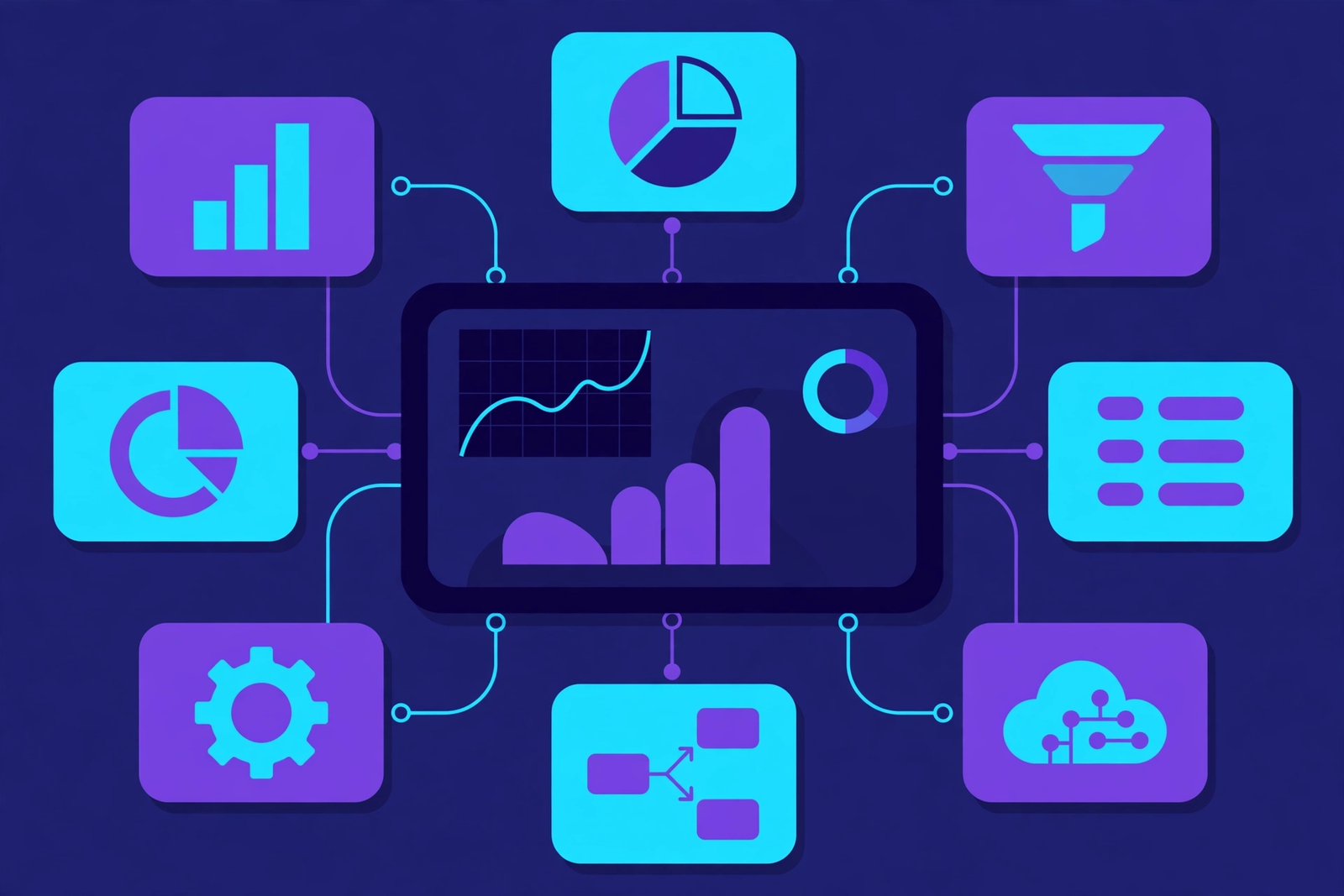
That fit shows up in everyday ways. A sales team gets a pipeline matching its real stages. An operations team gets a dashboard showing the figures it manages by, not a report it must export and rebuild. A customer service team works from one complete record instead of hunting across inboxes and spreadsheets. Together, that means hours saved weekly, fewer errors, and a smoother-running business.
The second major benefit is ownership. With custom software, you own the system, the code and the data model. You are not dependent on a vendor changing pricing, retiring a feature you rely on, or forcing an update that breaks your workflow. You decide the roadmap. For businesses whose processes are a competitive advantage, that control matters enormously — competitors cannot simply buy the same tool and copy how you work.
Our custom software development work starts from this principle: understand the business first, then build around it. The technology follows the process, never the other way round.
Off-the-shelf vs custom software: an honest comparison
Neither option suits every business. The table below compares them on the factors that matter most to UK buyers.
| Factor | Off-the-shelf software | Custom software |
|---|---|---|
| Fit with your process | You adapt to the tool | The tool adapts to you |
| Speed to start | Fast — sign up and go | Slower at first — discovery and build take time |
| Features | Broad and generic; much unused | Only what you need |
| Integration | Limited to vendor support | Built for your exact stack |
| Scaling | Constrained by vendor limits | Grows with you as needed |
| Ownership | Rented; stop paying, lose access | Yours — code, data, roadmap |
| Long-term value | Subscription, forever | An asset that evolves |
Off-the-shelf wins on speed and simplicity when your needs are standard. Custom wins when your needs are specific or your processes matter.
Seven signs your business has outgrown off-the-shelf tools
Most businesses drift into custom software after months of frustration. If several of these signs sound familiar, you are probably already there.
1. Your team lives in spreadsheets
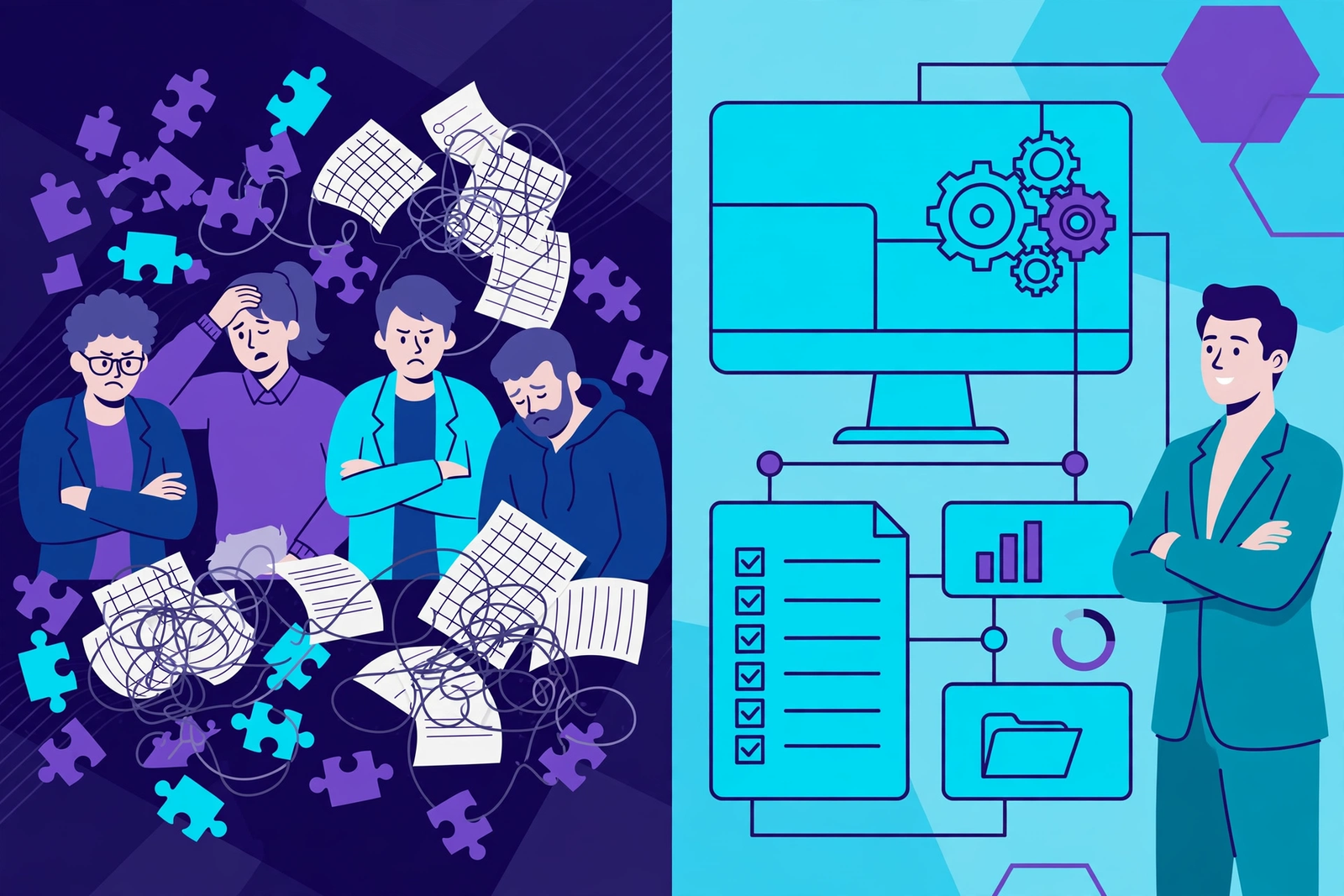
When spreadsheets become the real system of record — holding customer data, stock levels or quotes no software tracks properly — something has gone wrong. Version confusion and data nobody fully trusts are classic symptoms. Custom software replaces the sprawl with one reliable system.
2. You pay for seats nobody uses
Generic platforms charge per user, for every feature, whether your team uses them or not. As headcount grows, the subscription grows with it. A custom system has no per-seat toll: adding team members triggers no new licence bill.
3. Data is copied by hand between systems
When staff re-type orders into an accounting package or copy customer details into a CRM, you are paying people to act as human integrations — and inviting errors. One of the most immediate benefits of custom software for business is fixing this: systems connected properly, so data flows once and is trusted everywhere.
4. Your process is your advantage — and generic tools flatten it
Some businesses compete because they do things differently: a unique fulfilment process or a customer journey rivals cannot match. If software forces that process into a generic mould, it erodes the advantage. Custom software protects it by building the process into the system.
5. Reporting takes days instead of minutes
When a board report means exporting from several tools and stitching results together, decision-making slows down. A bespoke system gives leadership the numbers it manages by, live, in one place.
6. You have outgrown your current tools, but replacing them feels risky
Many businesses sit in an uncomfortable middle: the old tool is creaking, but a new generic tool means another compromise and more workarounds. A phased custom build avoids the cliff edge — new modules delivered alongside existing systems, data migrated carefully before anything is switched off.
7. Customers notice the friction
Slow quotes or support teams that cannot see a customer’s full history — customers feel all of it. Software that joins up the business shows up as faster, more consistent service.
The deeper benefits: automation, integration and security
Beyond fit, three deeper benefits explain why custom software often pays for itself in ways a simple feature comparison misses.
Automation of repetitive work. Every business has necessary, repetitive, error-prone tasks: chasing approvals, generating documents, updating records, sending reminders, reconciling figures. Custom software automates the specific versions your business actually performs, rather than a generic feature you must bend to fit. Skilled staff get back to work that needs judgement.
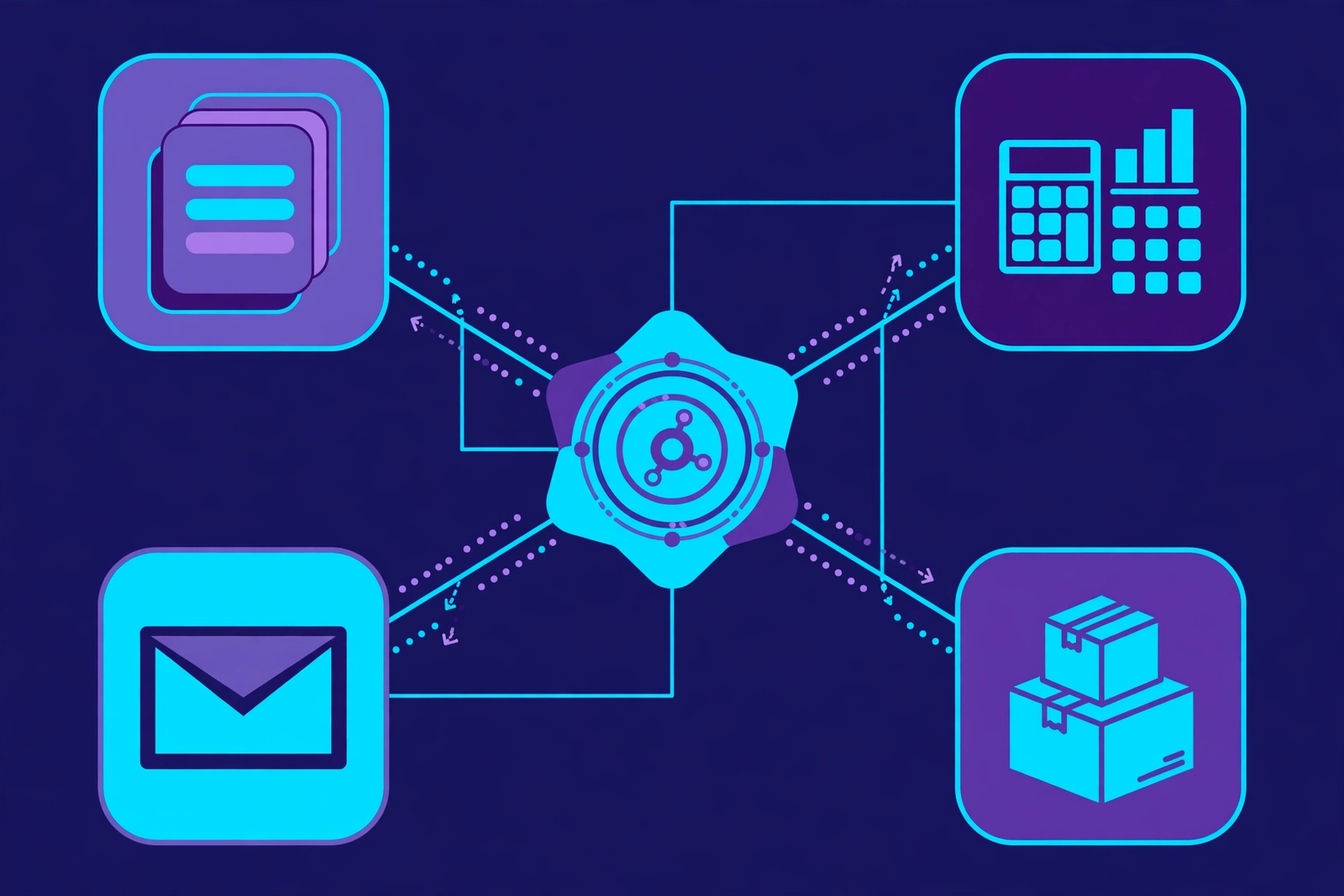
Integration with the tools you already use. No business starts from zero: accounting software, email, a website, maybe a CRM or store. A custom build connects to them through APIs and tested data flows, so information moves automatically and everyone works from one version of the truth. Where a legacy tool cannot connect directly, scheduled syncs or a phased replacement keeps the project moving. Our CRM development work is built around this idea: a customer system that talks to email, accounting and marketing tools instead of sitting apart from them.
Security and compliance by design. Generic software serves thousands of businesses, so its security model is generic too. A custom system is built around your obligations: role-based access, audit trails, UK or EU hosting, and GDPR workflows such as consent and erasure. For businesses handling health, financial or personal data, that control is the point.
When custom software is NOT the right choice
Custom software is not always the answer. If your needs are genuinely standard — a simple website, basic bookkeeping, standard email marketing — a mature off-the-shelf product will serve you well and start faster. Building custom there adds complexity without value.
Custom software also demands something from you: time for discovery workshops, feedback on prototypes, and decisions about priorities. If your team cannot spare that involvement, or if you need something live within days, a ready-made tool is the pragmatic choice. Some businesses take a hybrid route: keep a good generic tool for standard functions, and build custom software only for the one process that truly differentiates them or causes the most pain.
A good agency will tell you when not to build. If discovery ends with “you don’t need us for this,” that is advice worth trusting.
What building custom software actually involves
A well-run build follows a clear, phased sequence — and you stay in control at each stage.
1. Discovery: understanding before building
Discovery is the most important phase, and the one most often skipped by inexperienced teams. It means mapping how your business actually works today: who does what, where the bottlenecks are, which systems hold which data, and what “success” would look like in practical terms. The output is a clear specification and a phased plan — what gets built first, and what can wait. Good discovery often reveals that the real problem is not what you first assumed, which is exactly why it comes before any code.
2. Design and architecture
Designers and architects turn the specification into wireframes, interfaces and a technical blueprint: how the system is structured, how data flows, and how it will scale as you grow. You approve the designs before building starts, so there are no surprises later. Security, access control and integration points are planned here too, rather than bolted on afterwards.
3. Agile development in sprints
Development happens in short sprints, with working software shown to you regularly. You see progress early, you can correct course while correction is still cheap, and priorities can shift as your understanding sharpens. Many projects start with a focused first version — the core features that solve the biggest pain — then add modules later once the core is proving its value.
4. Testing, migration and launch
Testing runs throughout, not just at the end: automated checks, manual quality assurance, and user acceptance testing with your team on real workflows. Data migration is planned alongside the build — records cleaned, deduplicated and mapped into the new system, with test imports so you can verify real data before go-live. Where possible, old and new systems run in parallel, so launch day feels routine rather than risky.
5. Support and continuous improvement
Launch is a milestone, not the finish line. Software needs monitoring, security updates and small improvements as your business evolves. A support arrangement keeps the system healthy and gives you a clear route for the next features on your roadmap. The best custom systems keep getting more valuable after launch, because they keep evolving with the business they serve.
How to choose a custom software partner
Choosing the right partner matters as much as choosing to build. Ask these questions first:
- Do they start with discovery, or jump straight to a quote? Understanding your process before pricing protects both sides.
- Will you own the code and the intellectual property? Ownership must be explicit — no lock-in.
- Can they show work in your world? Similar complexity and integrations matter more than a long client list.
- How do they handle testing and support? Ask what happens after launch — that is where long-term value is decided.
- Do they communicate plainly? If they cannot explain their approach without jargon now, it will not get clearer during the build.
- Will they tell you when custom is wrong? Recommending an off-the-shelf tool when it fits is the strongest trust signal there is.
Our broader CMS and custom software services cover the full lifecycle — discovery, design, agile development, testing and long-term support — so a project does not stall between phases. If you would like a second opinion on whether a custom build fits your situation, that conversation is exactly what discovery is for.
Talk to WappexSol about custom software for your business
If spreadsheets, workarounds and disconnected tools are slowing your team down, a focused first phase may be all it takes to prove the value. We build bespoke software for UK businesses: internal tools, customer systems, workflow automation and integrations that fit the way you actually work.
Message us on WhatsApp, call us on +44 7435 738263, or email info@wappexsol.com for a no-obligation chat — and if you would like to talk about budgets, message us on WhatsApp and we will give you a clear, honest quote for your specific situation.
Custom software for business — frequently asked questions
What are the main benefits of custom software for business?
The main benefits are a perfect fit with your processes, automation of repetitive work, integration with the tools you already use, full ownership of the system and roadmap, and the ability to scale — without per-seat licence costs or unused features.
When should a business choose custom software over off-the-shelf?
Choose custom when your processes are distinctive, when you pay for unused seats and features, when staff copy data by hand between systems, or when you have outgrown generic tools. If your needs are standard, an off-the-shelf product is usually better.
Does custom software take a long time to build?
It depends on scope. A focused first version covering the core features can be delivered far sooner than a full platform, because agile development works in short sprints and shows you working software early. Starting with the highest-value features is the usual approach.
Do I own custom software built for my business?
Yes — with a reputable agency, you own the code, the data model and the intellectual property, and this should be explicit in your agreement. That ownership means you control the roadmap and are not locked into a vendor.
Can custom software integrate with my existing tools?
Yes. Custom software is typically built to connect with your accounting package, email, CRM and e-commerce store through APIs and tested data flows. If a legacy tool cannot connect directly, scheduled data syncs or a phased replacement of that component keeps the project moving.